Chief Kingsley
THE STORY
Who — Chief Kingsley of the Gorachouqua tribe
When — TBD
Where — Cape Town, South Africa
Fire Light — Ancestral Wisdom
Chief Kingsley
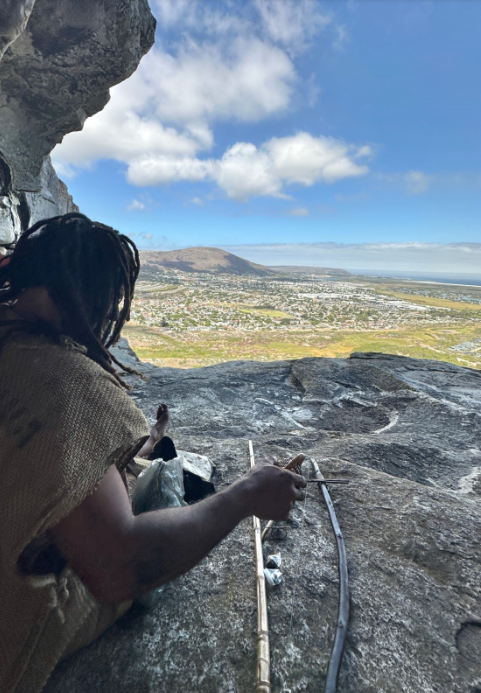
Chief Kingsley's single string instrument, a bowed tree limb holding taut a 3' length of wire, twanged and reverberated through the granite cave, evoking a knowing or an image of old gatherings around old music. He moved a rock to adjust the pitch of the string, while the end of the stick rested in his opened mouth, changing tone as he adjusted the sound like a mouth harp. It was so simple, yet profoundly beautiful and grounding.
Unfolding below our rock perch were the hills, mountains and oceans of the Western Cape, South Africa. Before it was named anything in English, Afrikaans, or Dutch, his ancestors called this area Camissa, which means "place of sweet waters." Chief Kingsley is an elder in the Gorachouqua tribe, one of the original tribes of the Khoi-San clans. They were nomadic herders who were especially adept at using the local plant life as potent medicines. And let me tell you, Chief still knows the plants intimately, as family, teachers, and allies.
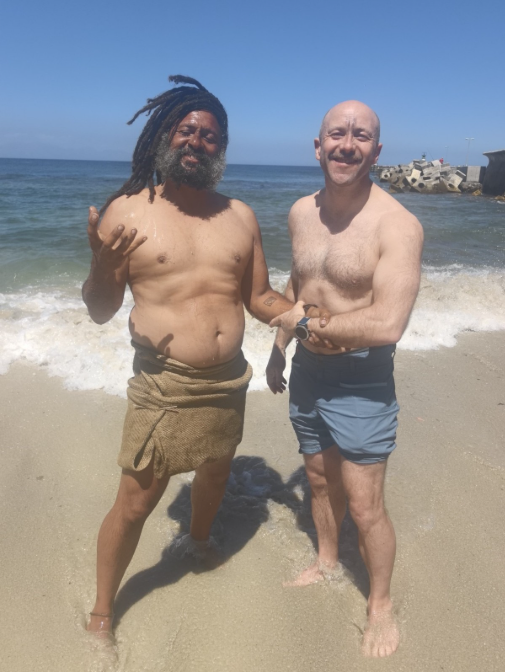
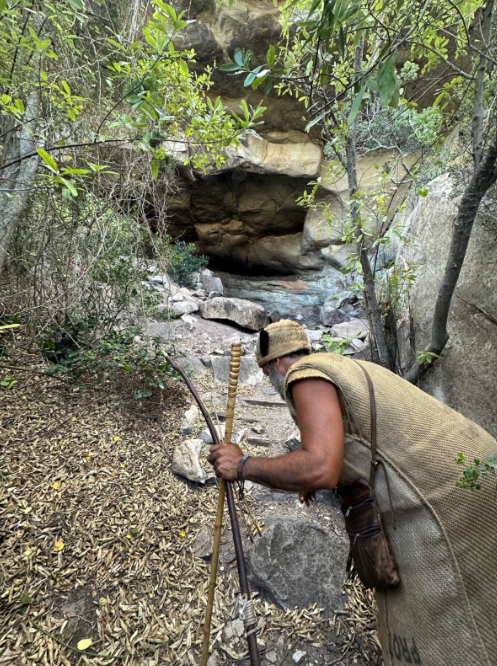
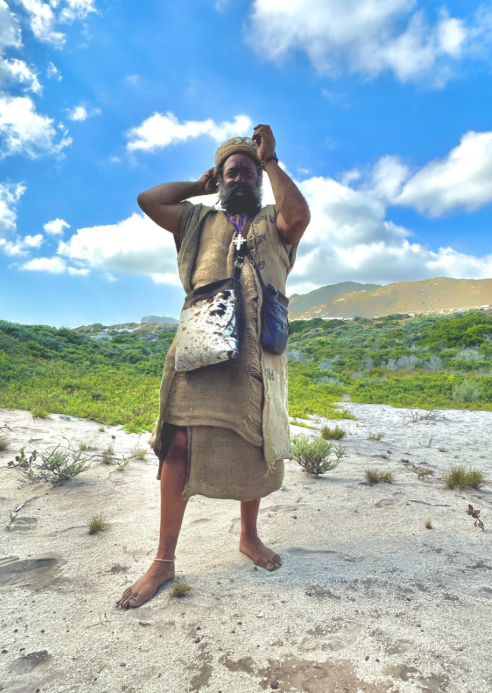
We walk. No, we run, through soft white sand dunes leading up and down the rocky cliffs that have been host to his people since before time was measured in seconds. He's a barefoot elder dressed in repurposed burlap sacks, and yet he moves like a teenager, quick, smooth, and with exuberance for life outdoors. Chief stops often to point out medicinal plants, offering me tastes or reminders of how to use them. Sometimes he speaks in English, but other times he's clicking and making sounds I can't even reproduce, yet they are profoundly beautiful. The Khoi words even seem familiar to some part of me.
For hours we explore the dunes, brush, rocks and caves. The history and wisdom in this place is palpable. Yet a mere kilometer away there are bulldozers flattening earth for more second homes. Beyond the expensive homes, in the low area that often floods, is a shanty town full of migrants and indigenous people unable to afford the affluent economy expanding through the Western Cape. It's much like the rest of the world: very few "haves" and countless "have-nots." Chief is deeply concerned developers will soon block his access to these ancestral lands, pave over the medicinal plants, and prevent him from his ancient rites of passage and ceremony across Camissa.
It's humbling to hear his stories, to see both the joy and worry in his eyes, to recognize the immense knowledge and wisdom in him that are facing extinction. It leads me to wonder:
What if we were all so steeped in relationship with land, sea, sky, plant, spirit and ancestors?
What benefit would we find in making a single string instrument from a giving tree and playing it among our favorite caves and special places?
How would the healthcare system change if we remembered how to use local plants to cure common illnesses?
I've got my answers to these questions, but I wonder what comes to mind when you slow down and ponder them. These are important questions, and time-sensitive ones.
Chief Kingsley and his apprentice Chad Cupido offer tours supporting local indigenous peoples with a focus on conservation of Khoisan culture, language, lands and practices. Check them out at travelandtourscapetown.com or contact Chad on WhatsApp at +27 74 831 5961. Chad is also actively looking for partners and grants to support his work connecting local youth to their indigenous heritage and preserving the natural resources of the Western Cape.
When you're in Cape Town, I hope you get to feel the spirited warmth of Chief Kingsley and witness the passion he has for kindling the flame of his vibrant culture. If that remote corner of the world isn't on your itinerary anytime soon, you can still learn about him and his work online. Either way, he's worth knowing.
