Quitting vs. Smartly Stopping

THE STORY
Who — Rob
When — TBD
Where — Cape Town, South Africa
Fire Light — Over-exertion & Stopping with Intention
Quitting vs. Smartly Stopping
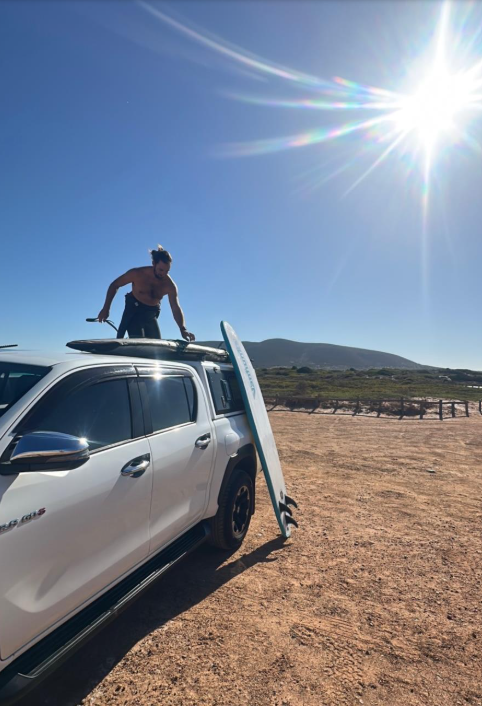
Deep inside I knew this wasn't a great idea when my arms felt like a bitter mix of jello and pain while I furiously paddled to catch a forming South African wave. It was day three in Cape Town, where the Atlantic and Indian Oceans meet in a stunning setting ripe for surf adventures. I figured this would be the best day of the trip, except I was in a bad way: exhausted from jet lag, arms smoked from a multi-pitch climb up Table Mountain the previous morning, followed immediately by a fast eight-mile surf ski kayak with world-class competitor Kira Bester.
To say my arms were tired is an understatement. Stuff them inside a 5mm wetsuit, because these waters are frigid, and it's tiring just lifting your arms over your head. Yet I had hired Rufus, a local surf wizard, for a full day and by God I was determined to make the most of it, even if I wasn't having fun.
This isn't an uncommon situation for me: excited to maximize an opportunity, but my body isn't at 100%. I learned early that my body can do far more than my mind thinks it can. But that means I regularly walk the sharp edge of over-exertion. My mind said: "You've already paid for a full day with Ru. Suck it up. Don't waste this." My body said: "Can we just sleep in, have Rufus drive us around, and get a massage?"
I didn't listen to my body.
With arms that gave out after just a few seconds of paddling, I got caught inside over and over, pounded by breaking waves and mostly unsuccessful getting past the breakers. The wetsuit was constricting. The waves unrelenting. My arms worthless. Rather than admit I was in no shape to surf, I kept pushing deeper into frustration, getting crushed and tossed on every wave I managed to catch. Once I got held under long enough that I genuinely worried about air.
Then I broke Rufus's beautiful longboard.
On a wave I caught but couldn't control, the board jammed down and snapped clean in two on the sandy bottom. When I saw it, I knew. I hadn't been surfing. I'd been trying to not let the tour go to waste, to not disappoint Rufus, to squeeze everything possible out of Cape Town. The fun had left hours ago.
I'm lucky it wasn't me that broke. In that state, I could have taken a board to the face or gotten caught in a riptide. Risk goes up and returns diminish when we cross the line between beneficial stress and too much. My arms had nothing left, and my mind, my ego, kept pushing anyway.
With some embarrassment, I showed Ru the broken board, told him we needed to stop, and paid for the repair. He shrugged it off like the great guide he is, drove me to a beachside lunch spot, and we spent the afternoon in deep, soulful conversation. The weight lifted the moment I admitted I was done. If only I'd done it hours earlier — we'd have toured more of the region, saved a board from the repair shop, and given my body the rest it needed.
When I said I was done surfing, even if it was halfway through the tour, it wasn’t quitting. Quitting is when you still have enough conditions to safely continue but your mind takes you out of the opportunity too early. Stopping with intention is different: it’s a smart recognition that conditions are no longer beneficial. Smart stopping preserves safety, health and even the fun.
Remember: pushing yourself is healthy. The right amount of stress is how we grow. Too much has consequences. The real skill is getting to that edge, teetering a little, and stepping back with humility and self-compassion, so you can return again and again to the adventures that make life worth living.
