This Mountain Is Hoping You’re Not Comfortable
What a 1,400-year-old Japanese tradition taught me about why we have to stop making everything so easy.
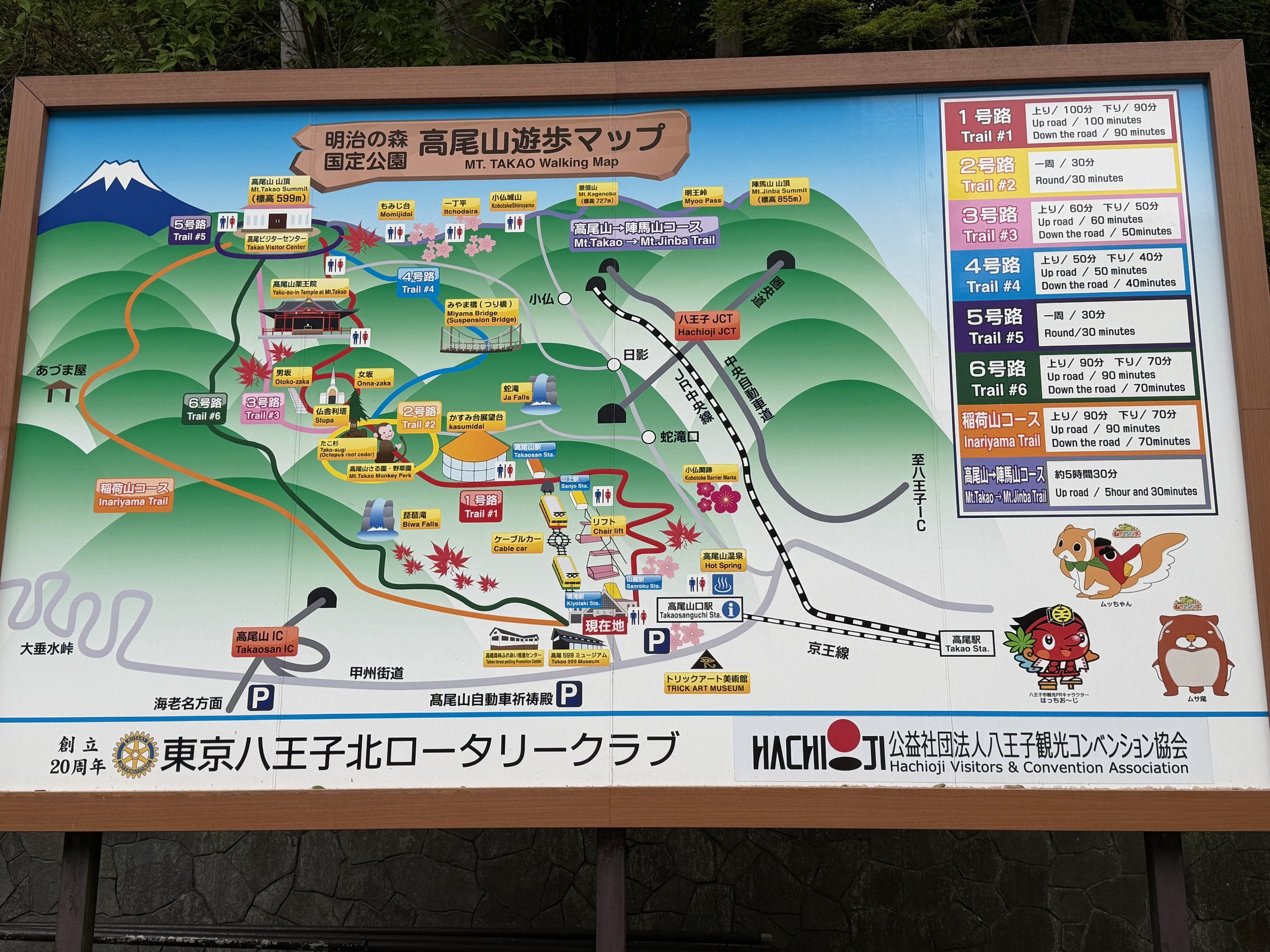
I didn't know anything about Mt. Takao when I started walking up it, other than a Japanese pilot recommended it, the train went virtually straight there from near my hotel and it was the tallest “peak” in the Tokyo prefecture. That was enough. What I wasn't prepared for was the way the mountain would speak to me — not in words, but in the quality of light through cedar branches, the symphony of bird song mixed with waterfall, in moments of silence that felt less like absence of something and more like abundance of aliveness surrounding me.
As I slowly ascended into the verdant forest just after 7am, I sensed there was something ancient here, pressing up through the stone and moss. It took me a mile of awe and wonder to understand that I hadn't just gone for a hike. I had walked, unknowingly, into one of the oldest living spiritual traditions in Japan.
What I had felt was Shugendō.
THE WAY OF TRAINING AND TESTING
Shugendō — literally, "the path of training and testing to achieve special powers" — evolved in Japan from the 7th century onward, drawing from a beautiful mix of esoteric Buddhism, Shinto, and “mountain worship”. (Now this is my sort of religion!) Its practitioners are called Yamabushi, which means “those who bow down to the mountains”. The name itself is a posture of humility before wild nature.
Their central teaching is not complicated. In Shugendō, sacred mountains are seen as the home of the deities and are a symbol of the entire universe. The mountain is not a backdrop for spiritual practice — it is the spiritual world, made physical. To enter the mountain is to enter reality directly: raw, indifferent, alive.
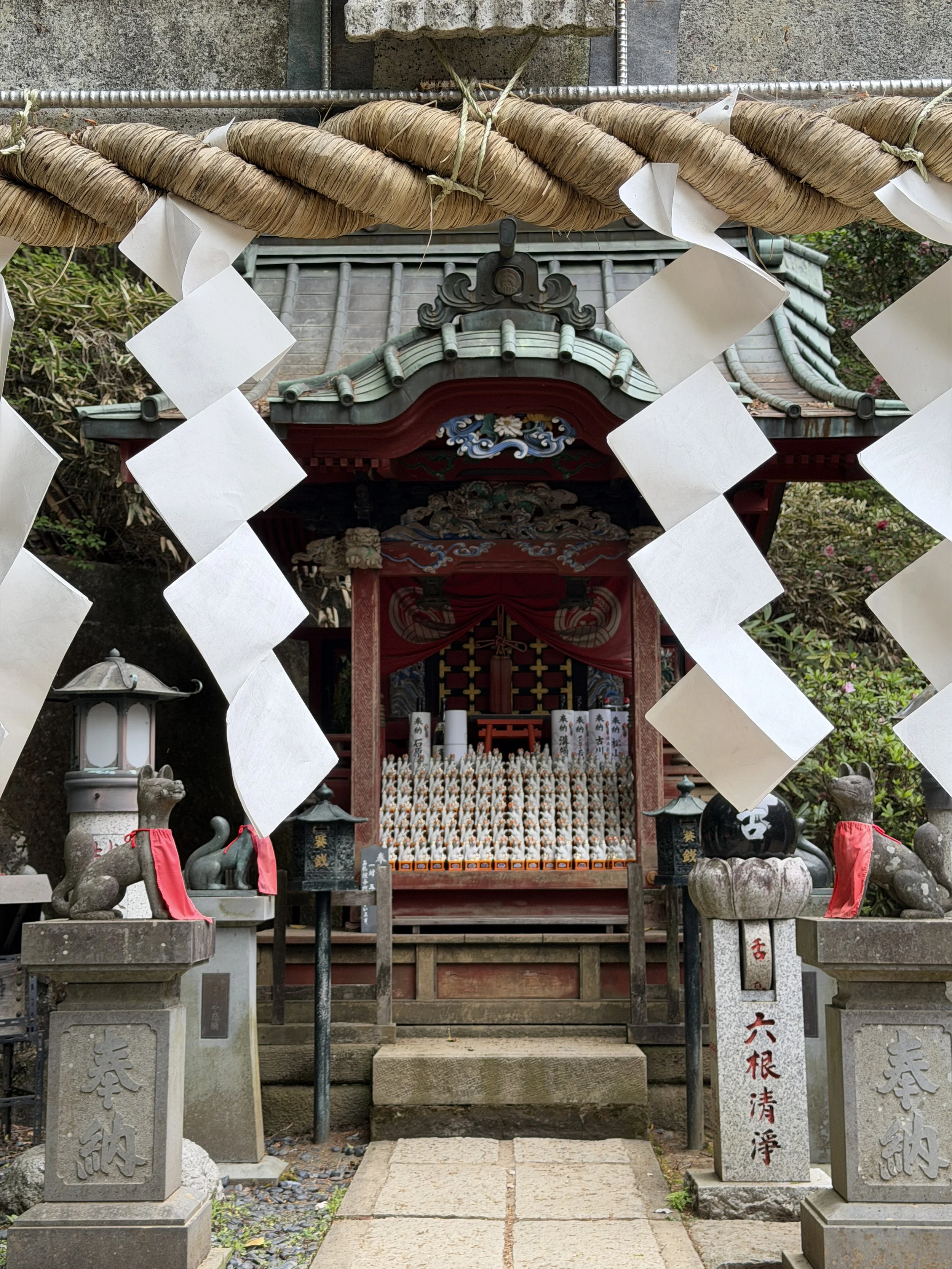
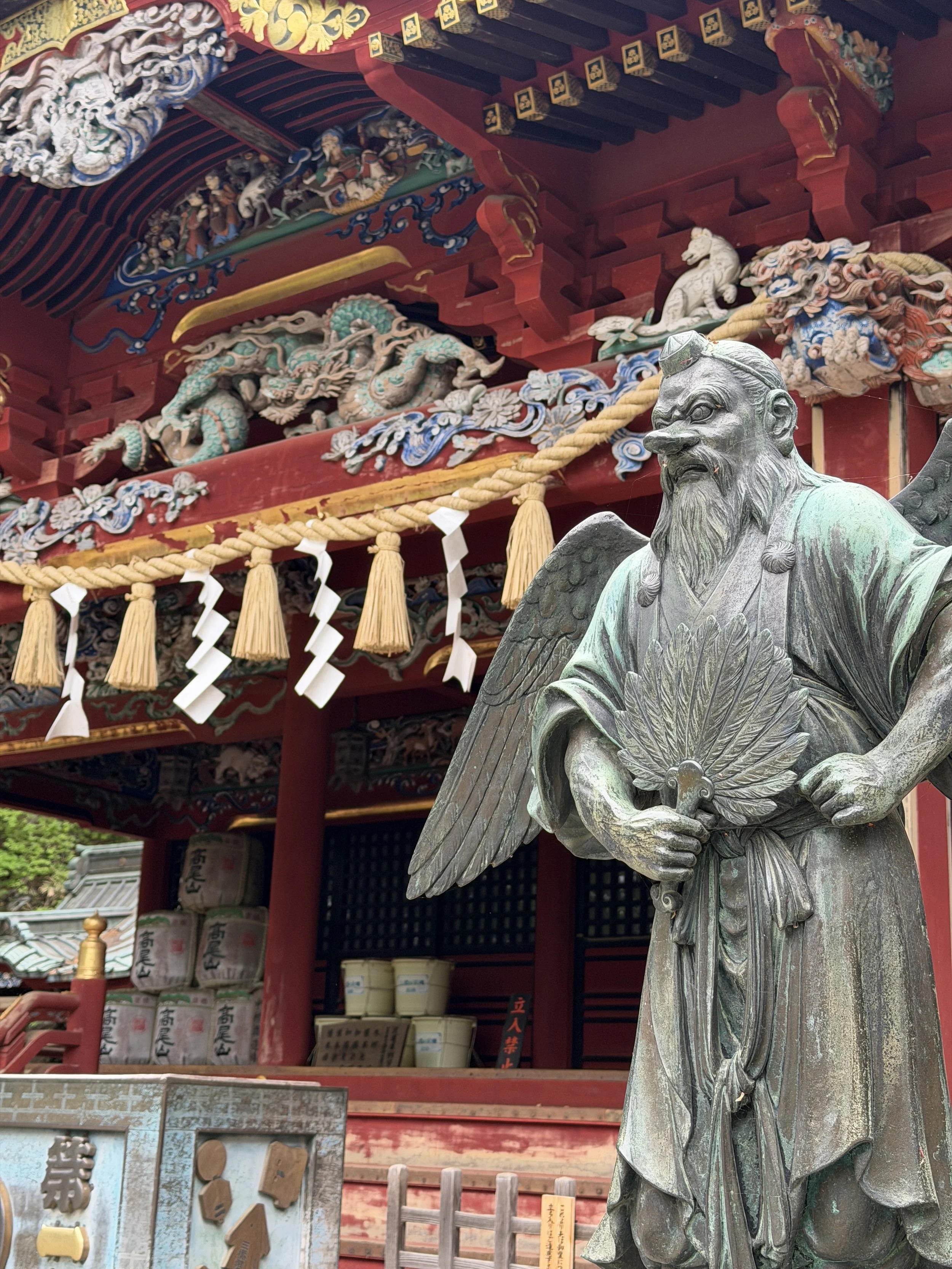
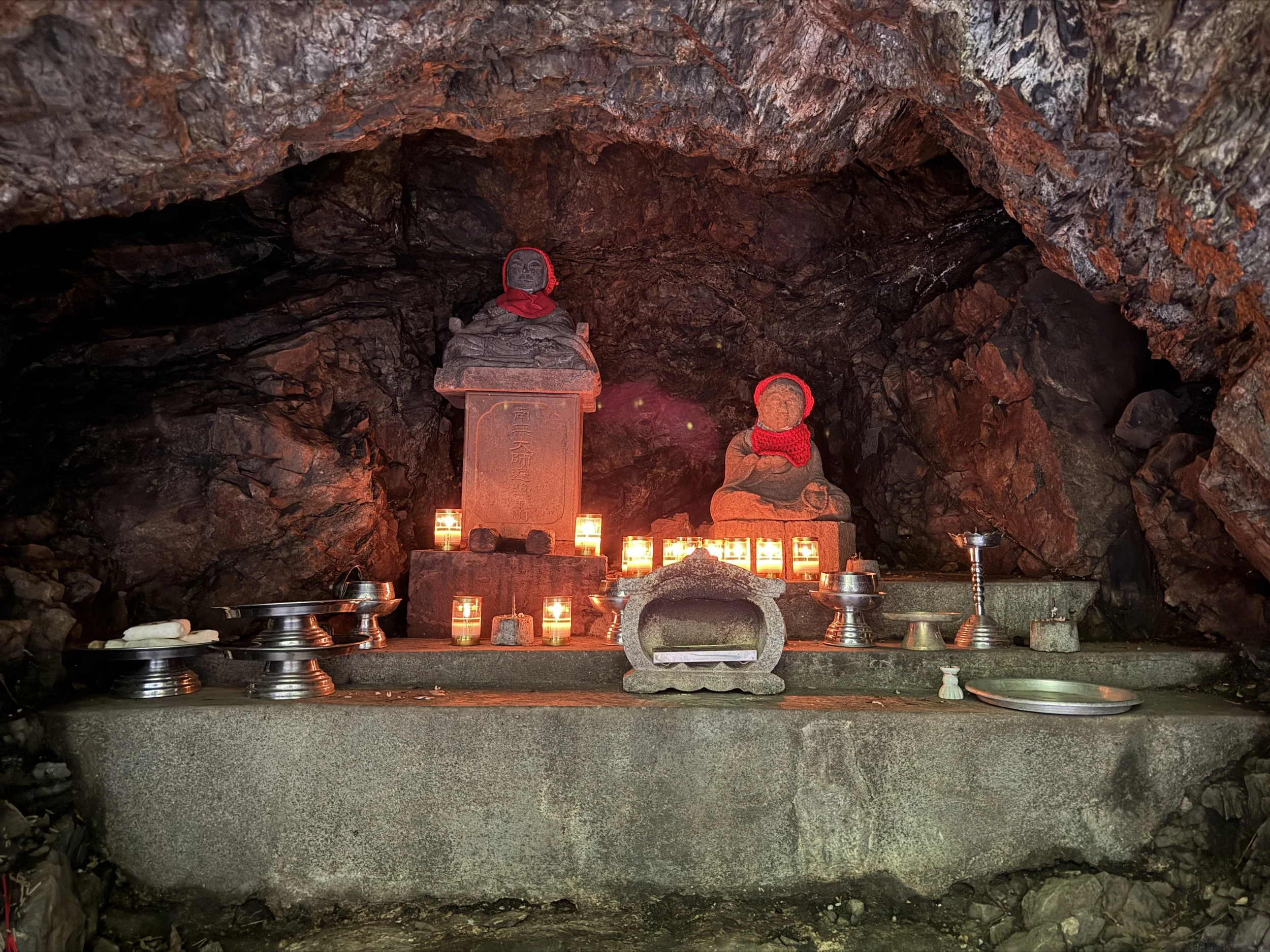
Mt. Takao has been a Shugendō center for over 1,300 years. The cedar-lined trail I walked was never “just a hiking path”. It was, and remains, a pilgrimage route. From Yakuō-in Temple, a stunning collection of buildings and shrines found in the mountain's upper reaches, to the sacred waterfalls where purification takes places, to little caves full of candles to honor the wild forest spirits — this mountain is a living temple honoring wild mountain wisdom and the living beings of Mt. Takao.
WHAT THE MOUNTAIN ASKS OF YOU
In the dark forest
a berry drops
the sound of water
— Matsuo Bashō
The yamabushi didn't go to the mountain to get fit. I now understand they went because the mountain does something to a person that no comfortable room ever can: Standing under freezing waterfalls for purification. Walking in complete silence for days, fasting, chanting sutras until the ordinary self gets thin and something older and quieter comes through. Our strong sense of self is thinned and we become porous, shapable, to something bigger than us.
The logic underneath all of it is the same: discomfort is not the obstacle to growth. It, in conjunction with intimate engagement with the wild mountain community, is the mechanism. The cold water, the exhausted legs, the hunger, the silence — these are not punishments. They are the teaching itself. The yamabushi understood, long before neuroscience had language for it, that the body pushed to its edge in wild nature is a portal. Exhaustion, cold, altitude, awe — these dissolve the ordinary self in a way that nothing gentle can.
That Bashō poem keeps returning to me. A berry drops in darkness, and what you hear is water — some distant, invisible thing that the small disturbance reveals. That's the whole epistemology of Shugendō: the discomfort is the berry. What it reveals is the water underneath.
(Whoa, I went deep there. Are you still with me?)
THE INVITATION
We live in a time of radical comfort. Temperature-controlled rooms. Nutrition delivered to our doors (and even to the hotel room I’m writing this from). The engineering of ease has reached a kind of tipping point, and the cost is subtle but real: when nothing is hard, nothing teaches. The yamabushi arrived at this conclusion 1,400 years ago and built an entire tradition around the antidote.
I walked up Mt. Takao knowing nothing of this. I felt the magic of the mountain before I had language for it — the old-growth cedars adorned with braided ropes, the quality of silence near the shrines, the incense smoke curling in the morning breeze. Something was speaking, and my body received it before my mind could organize it into understanding. (Those that know me well, know this is certainly not the first time for such happenings)
The yamabushi would say that's exactly how it's supposed to work. The mountain doesn't explain itself. It waits until you are quiet enough, tired enough, present enough to hear it.
You don't have to become a yamabushi- I wouldn’t even know where to being to go down that path. But somewhere there is a mountain — or a river, or a ridge, or a silence you have been avoiding — that has been calling to you. Take one step toward it. When you get there, stop trying to conquer it.
Bow down. Listen.